Saturday, March 30, 2013

The Day Grace Came

Luke 24:1-12
 
 “There’s a story of a little boy who was not happy about going to church on Easter Sunday. His shoes were too tight, his tie pinched his neck, and the weather was way too nice to be cooped up inside a church…. As he sulked in the back seat, his parents heard him mutter; “I don’t know why we have to go to church on Easter anyway, they keep telling the same old story and it always comes out the same in the end.”
Prayer:
Please watch this video by Skit Guys.


-       Mike is a recovering alcoholic and would often go into the worship space to pray and ask    
    God to forgive him. He once told me that he wonders if God could ever forgive him of all the
    bad things he's done.

-       Joann struggled at believing she was worth anything as a person… she was abused by her
     father as a child and as I listened to her she contemplates suicide. She wonders how God
     could love someone like her.

-       Chuck has a degenerative eye disease and has become blind. He struggles to find   
     self-worth. He says, “How can I live and work when I can’t see? One day he ran into another
     person and fell. The other person noticing he was blind and yelled at him saying, “you’re a
     worthless ________ and you shouldn’t be out by your-self.

-       A woman is angry that her young husband dies and leaves her alone. She is angry with
     doctors for not doing more and accused them of making mistakes. She asks God why he let
     this happen. God why would you do this to me? Why do you hate me?

-       Peter was standing by a fire pit and people were coming up to him asking if he belonged
     this guy named Jesus. Peter denied it over and over. Peter believed he didn’t deserve 
     forgiveness because what he did was unforgivable.

In all these stories we hear of struggle and doubt. Peter, Thomas… in fact all of Jesus’ friends struggled with the resurrection… We struggle with how God dispenses his forgiveness and grace. All of us have had regrettable experiences… all of us are broken and yet in our life stories it’s really not about us or them… But about Jesus’ love for us.

In all of these stories these people experienced God’s love and forgiveness and with God’s help are walking a path of redemption and resurrection. You see… It’s what Jesus did on Friday that TAKES the unforgivable and MAKES it forgivable. On Friday grace came and today Easter Sunday we celebrate that Grace and love are possible…. Forgiveness is possible.

Today is Easter and “You Are Loved”
 This is the story of Easter and Forgiveness and Grace…that God has come and love is made possible. Today is Easter and love is present. It is Easter and you are loved in an inconceivable, irrevocable, and uncanny way by a God who created you for His purpose. It is Easter and we are infected with the possibility to love… we are capable of love… we have the capacity to love… a pervasive desire to love. It might not be at the forefront of our psyche… It may not appear to be a driving force in our lives… But I’m here to tell you… IT IS THERE!!!
Love and Forgiveness is here!
It is Easter and you are forgiven and made to love… and my friends… You are good at it!

This is the message today… Easter Sunday… It’s Easter and you are loved and you are forgiven because today is the day that GRACE came.


See You Out On The Road


Saturday, March 16, 2013

Heavenly Scent


March 16, 2013 
John 12:1-8


PRAYER:

Our lectionary takes an unexpected break from Luke’s gospel, and we hear from John a story that really has more questions about it than answers.

John’s story still follows the same trajectory of Jesus heading towards Jerusalem as does Luke, but here the deviation has Jesus bringing Lazarus back to life and his sister Mary washing Jesus’ feet with some expensive fragrance.
Then the questions arise.

The First Question: “Is Mary’s act an Act of Devotion or an Act of poor stewardship?
In many ways this act of Mary is a precursor to what Jesus will do in the next chapter… Jesus washes his friend’s feet. Interestingly, when Jesus does this, Judas does not object, Peter does. Ultimately… is Mary’s act an act of discipleship? In Luke 10:38… Jesus is at Mary & Martha’s home for dinner and Martha gets miffed at Mary sitting at Jesus’ feet… and once again Mary is admonished for doing the right thing. In John… Mary is again doing a sacrificial act of devotion. Is Mary demonstrating an unmerited act of love and service? We might do well to pay attention to Mary.

Th e 2ndQuestion: “What was Mary Thinking?”
This perfume was very expensive and equivalent to about 1 year’s wages for person who did manual labor. It seems ridiculous maybe almost scandalous to waste this very expensive fragrance on some ones feet. These fragrances would have never been used outside of burial rites. So… you can emphasize with Judas who suggests selling it in order to help others. And, if we weren’t told of his motives, we wouldn’t object to this reasonable request. In fact… we often rationalize like this all the time… sit in on a council meeting. We’re not told of Mary’s motives either… is she doing this because she is thankful for Jesus saving her brother from death or an authentic act of devotion to Jesus being Lord and Savior?

The 3rd Question: “What does Jesus Mean...? “You will always have the Poor?
John ends this story with Jesus saying, “You will always have the poor with you, but you won’t always have me.” Is Jesus dismissing the poor? Is Jesus telling us the poor don’t mean much? But one thing for sure… we’re uncomfortable when Jesus says things like this. Jesus tells us in Matt 5… the beatitudes… “Blessed are the poor, for they will inherit the kingdom of heaven.”
What are we to believe?
We know Jesus exaggerates… mostly with the Pharisee’s.
Judas seems to make an attempt to emphasize with the poor.
I’m wondering if the point Jesus is making isn’t about the poor, but of him-self. Jesus has proofed he loves the poor and as he prepares to enter the last week of his life he is pointing towards his death, and this death testifies to God’s abundant love for all, and  Mary picks up on it offering her love and devotion. Jesus’ saying of the poor is not about ones station or circumstance in life, but about his love for us no matter those situations.

I’m wondering if this story isn’t so much about the poor because as Jesus says, “They are always among us in a variety of ways.”

And… it’s not about Mary over against Judas as a moralistic endeavor of how we should be.

But about Jesus Himself in that Jesus needs to be the focus of our devotion, rather than the distractions around us.
  
In the end it’s about Jesus + Nothing
-       We don’t need to do anything.
-       We don’t have to do anything.
-       We just need to be devoted to Jesus.

We shouldn’t fear the questions here and fret why Jesus says what he says because Jesus has demonstrated his love for people both the poor and those with means.

John tends to use symbolic images and language to illustrate his point to his readers. John’s readers understood what Jesus meant.

And it’s OK that we are challenged by his words.

I believe it’s OK to live with the questions… perhaps the questions will elicit conversation throughout the week.   


See You Out on the Road


Friday, February 15, 2013

Dust... Ash Wednesday


Prayer

I do not like Lent.
I do not like being a Jesus follower in Lent.
I do not like it because Jesus confronts me.

Stories like these just deepen my dislike for Lent.
Stories like these point, to how negligent I am as a human being…. A man
Stories like these, Jesus cuts to the chase and gets in my face.
When you get down to it… stories like these really shows my dust… my dirt… my true self.

Rms 7:15, Paul says,
 I do not understand what I do. For what I want to do, I do not, but I do what I hate.”

Lent shows our dirt… Lent is an opportunity to wash the dirt and dust off.
Lent is an opportunity to look at ourselves and make changes.
Lent is a time to re- remember that we are finite and human.
“From dust we were created, and to dust we will return.”

Lent is an opportunity to remember the cross of ash on our foreheads as an opportunity to remember God’s love for us through God’s son Jesus.

What about you… How does Jesus encounter you in Lent?

We can see the speck in others, but all to often, we neglect to see it in us.

Even though we are created from dirt and will return to dirt, God made a way for us to be loved by the cross of Christ… Forever. 


Monday, February 4, 2013

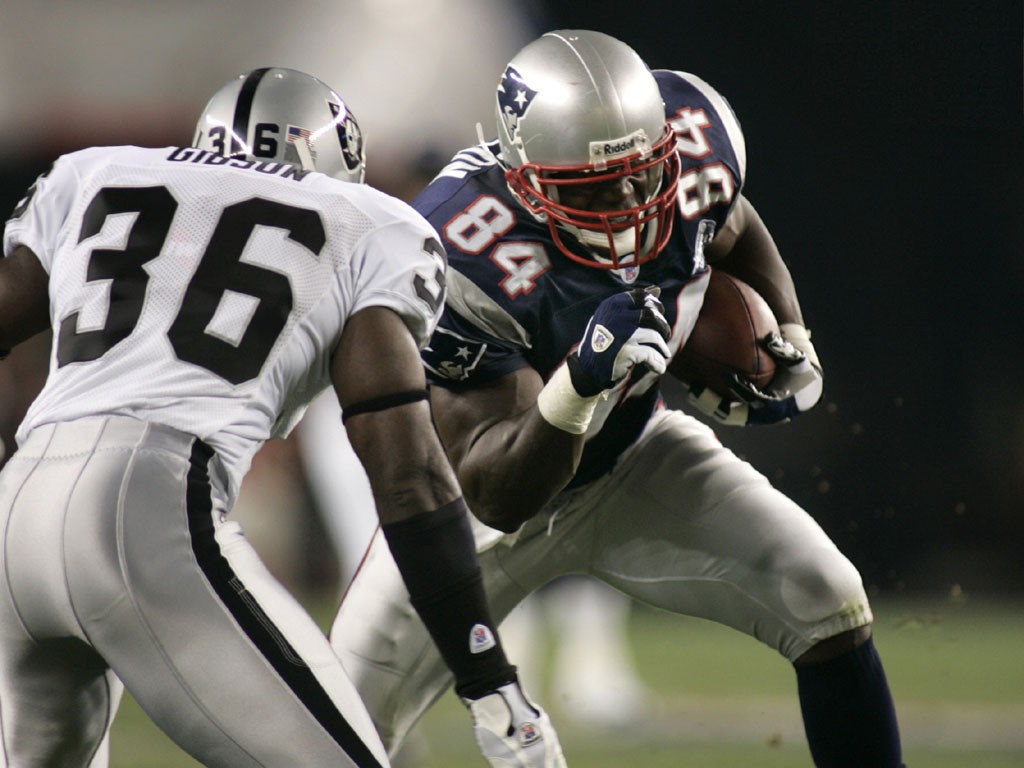
Why do we care about football?

http://dailyfantasysports2010.files.wordpress.com/2010/05/american-football-5.jpg

 Seth Godin shares a blog article about football I found enlightening. He describes it not only as an all-American past-time, which it is, but how it has become us. He ends the piece differently than I thought, which may mean the future of the sport may be in jeopardy. Also at the end I postulated the same outcome has come to the church and his insights may have real-life  implications for us in the church. It seems we (the church) have all too often looked at being the church for the masses when we probably we need to be looking at church as tribes, communities, and connections. Give the article below a read and let me know what you think?

Why do we care about football?

For someone outside the US, the visceral connection with football seems mysterious. You can understand a lot about the future (and past) of marketing once you understand how the sport turned into a cultural touchstone.
Tribes -> TV -> Money  -> Mass -> TV -> Tribes
Football as we know it started in colleges. It was an epic muddy battle, pitting one alma mater against another, a war-like, non-balletic battle that united (at a pretty elemental level) the tribes on each side. As it grew as a college sport, it became as much of a social event as a sporting one, with alumni and students finding connection around a game.
But if that's all it was, today wouldn't be the biggest day of the year for several industries. If that's all it was, you wouldn't be able to pick a fight merely by challenging the hegemony of football or the local team. We'd be spending as much time and energy on soccer or lacrosse or basketball, but we don't.
No, it turns out that, quite accidentally, football, more than any other sport, is made for television. It's better on TV than it is live. The combination of the play clock, the angles, the repetition and the opportunity for analysis all make it perfect to watch on TV. And perfect to run commercials on. TV and football grew up together, side by side. Instant replay and the thirty-second commercial, supporting each other.
It's not an accident that the commercials are as much a part of the Super Bowl as the game. The commercials represent both the cash component of football as well as the cultural souvenirs that go with our consumption of the game.
Fifty years ago, a coat salesman paid $4,000 for the rights to film a game, and NFL Films was born. The decisions Ed and Steve Sobol made over the years turned the sport cinematic, amplifying the tribal origins but taking them much further. They used sound editing and shot on film, all to transform a game into a spectacle.
Then, the second great accident occurred: As football became the official sport of television, it generated billions of dollars in revenue. This revenue led advertisers to push for more football, which led to more television, which led to colleges transforming football from a small sideline into a cash cow of some focus, despite the fact that it has very little to do with the core mission of the institution.
People justify the unpaid (and dangerous) labor of college football players by pointing to all the scholarships. But the scholarships aren't for playing football, they are for appearing on TV. That's what pays for the system.
The media-football complex drives deep into childhood, with many kids fast-tracked from a very young age into the game (not soccer, not baseball, not physics) at some level because of TV and because of money and because of tribes. If football is part of what we stand for, then of course we're happy to have our kid be part of that. But what does it mean for football to be part of what you stand for?
No one stands for movies, or ice cream or double-entry bookkeeping. No, a sport has become a pillar of our worldview, a tribal and economic connection to our past and our future. We don't want to understand the history and the money and the happy accidents. We just assume that this is as it was and as it will be.
Going forward, no other sport will ever have a run like this, because the TV-cash part of the connection can't be recreated. Mass TV built many elements of our culture, but mass TV (except for tonight) is basically over.
The new media giants of our age (Facebook, Twitter, Google, etc.) don't point everyone to one bit of content, don't trade in mass. Instead, they splinter, connecting many to many, not many to one.
The cultural touchstones we're building today are mostly not mass, mostly not for everyone. Instead, the process is Tribes -> Connections/communities -> Diverse impact. Without the mass engine of TV, it's difficult to imagine it happening again. So instead we build our lives around cultural pockets, not cultural mass. Our job as marketers and leaders is to create vibrant pockets, not to hunt for mass.

Saturday, January 26, 2013

I Haven't Been to Church

 don't go to church 

This past Christmas was the first time in my life I didn’t go to a church for some sort of service. I’m not in a bible study or small group. In fact being a part of organized religion has completely melted out of my life in the last twelve months. If you were to ask why, the answer is simple; I’ve not attended because after working in churches for 10 years - two of which some would claim are the best in the country - I haven’t found any value in going.

Continue Reading...
http://tonysteward.me/post/41420912985/i-havent-been-to-a-church-in-over-a-year 


Sunday, January 20, 2013

“Mission From God” Part 1: Why This is Important


Jan 20, 2013 Sermon                                                      
Neh. 8:1-3, Acts 2:14,36-41, Luke 4:14-21
                                                                                                 PRAYER

 “Mission from God”

We begin a 6 week series titled “Mission of God” and over the next 5 weeks we will reflect on and have a conversation about what Cross Lutheran’s mission of God will be. But in order to have an understanding of what God’s mission for Cross is we have to ask some questions for us to think about.

 Missio Dei… Latin for “Mission of God”
The term “Mission” has been a buzz word for many years in the church as well as in all aspects of life. What is your mission?.... You need a mission… Mission is what we do… and so on. Many often ask, What is Mission?

Many understand mission work for the church means to go to another country and convert people. That’s what has often been referred to as the “Mission Field.” According to Gallup… that’s what most Christians believe when asked what it means to be a missionary. The same Gallup poll also points out that the US no longer sends out the most missionaries into the world. The poll also says that other religious traditions in other countries believe the richest mission field is the US, and they are sending missionaries here… most are Christian missionaries from Africa. Most Americans think the mission field is in Africa.

The BIG BIG question is….
What is our Mission?... and Why is this Important?

Your familiar with the Blues Brothers and their Mission from God... check out the video


For many congregations their mission has been to bring people into the church. The church was the place where you learned about God. This was an easy mission to fulfill because people were immigrating to this country and depending on your ethnic background you went to a corresponding church. If you were German or Scandinavian you went to a Lutheran Church. If you were Polish, Italian, French, Irish, Hispanic you were most likely Roman Catholic. If you were English… Anglican…. Scottish… Presbyterian.
It was easy to fill the churches mission… they came.

Today for better or worse this is not the case… in fact, it hasn’t been the case for over 40 years… since the 1960’s. People are not coming to the church, and they’re not going to come to the church in the ways they once did. Today you have to be intentional about connecting with people, and therein lays the problem for us. In the past they came… religious life was part of society… it was what you did, even if you didn’t believe… Today it isn’t the case, and because we never had to connect with others we don’t really know how.

And we still revert back to this understanding… and it happened last Thurs at the leadership meeting when we were reflecting on doing GREAT things… we want people to come here. My friends we need to begin to think differently if the church is going to thrive in this always changing ever change world we live in.

In our Bible readings today Nehemiah states the Mission of God was for the people to read from the Law of Moses.
Our Acts reading the Mission for Peter was to Preach, Baptize, and invoke the Holy Spirit.
Our gospel reading from Luke, Jesus’ Mission was to tell the Good News to the Poor, announce Freedom for the Prisoners, give sight to the Blind, and Free those who Suffer.

If you noticed, from our reading in the OT to Luke, the same scenario as ours has happened. People went to the temple because that’s how you learned about God. The mission was to read from the Torah… the Law of Moses… if you noticed that’s the church… they were in the church. In Acts… they start to go out… Peter preaches outside of the church. The mission begins to be outside of the church. And… Jesus… says nothing about being in the church or being a church.

So… Why is this Important? First… That God is a God who Moves
Warren Schulz of the Albin Institute says, “We have most often looked at God as a “Noun”. But, God is a God who moves. God is really a “Verb” God does things, God gives vision, God acts.”

In John 14:12… Jesus tells his friends if they have faith they will do even greater things than he. If you want to do great things you have to be willing to work with a God who acts. You see… our God doesn’t sit still… within this I believe there is an expectation for us to act on and do things for God… In other words, God expects us to leave the building sharing good news.

The Holy Spirit Empowers
This endeavor is not our doing, but the empowering of the Holy Spirit. You can see if it’s up to us… our agendas, our interests we do not go far, in fact, we’d probably screw it up, but with God everything is possible. The Holy Spirit empowers us to be hands and feet serving not our mission & purpose, but God’s.

In our Acts passage we see this being done. Peter, filled with the Holy Spirit preaches repentance and grace… God acts, and 3000 believed and were baptized… 3000 lives were transformed and changed that day. Without the Spirit of God among you, you will only be an entity upon yourselves.

The mission of God is important because God acted intentionally to come to us in human form to share a message of Love, Grace, and Forgiveness and we need to share that with others.

Over the next 4 weeks we will have an opportunity to share our thoughts on what God is calling Cross Lutheran to be about.
-       What is God purpose at Cross?...What are your mission priorities?...
-       The type of Pastoral Leader… and areas of ministry focus.
My hope is that we will start this discernment and you finish it with you new pastor within that first year.

Close with story… I shared this before, but it bares repeating.. there is a story of a community of people who lived on a stretch of dangerous seacoast where shipwrecks often occurred. Eventually, some of the townspeople decided to put some time and effort and money into a rescue operation. A small life-saving station was built and the devoted members of the rescue team kept an ongoing watch over the sea, ready to use their little boat to search for survivors in case of a shipwreck. As the result of this volunteer operation, the town became famous because of the many lives that were saved.

More and more people joined and became part of the team. Soon a new building was erected. It was much larger than the first little building and it was beautifully furnished and decorated. And as more and more amenities were added for the members' pleasure and comfort, the new building was slowly transformed into a kind of clubhouse. As a result, some of the members began to lose interest in the rescue operation.

But then a shipwreck occurred and many survivors were rescued and brought into the clubhouse for first aid. During the period of the operation which lasted for several days, the frenzied activity caused the attractive "clubhouse" to be considerably marred by such things as bloodstains on the lush carpeting. At the next meeting there was a split in the membership. Most members felt that the life-saving operation was a hindrance to the social life of the organization. Those who disagreed were told that they could build another little station further down the coast. And, as the years went by, history continued to repeat itself. Today, so the story goes, that seacoast has a number of exclusive clubhouses dotting the shore - but no one in the area seems to be concerned with rescue operations.

My friends you’re on a Mission from God!


See You Out on the Road.


Friday, January 18, 2013

Prayer of Gratitude


O Lord, as we prepare to celebrate and give thanks this year, may we find it in our hearts to be grateful no matter what. May we praise you for what we can do and praise you in spite of what we can't. May we thank you for what is and what isn't, for what is going well and for what is not. May we thank you for what brings us joy and even for that which brings us grief, for if our grief testifies to anything, it testifies to the depths of our love. Bless us and keep us, dear God, we pray, and turn our hearts ever and always toward your all encompassing light, you who are our creator and savior, our redeemer and friend. Amen and amen.

Sarah Buteux